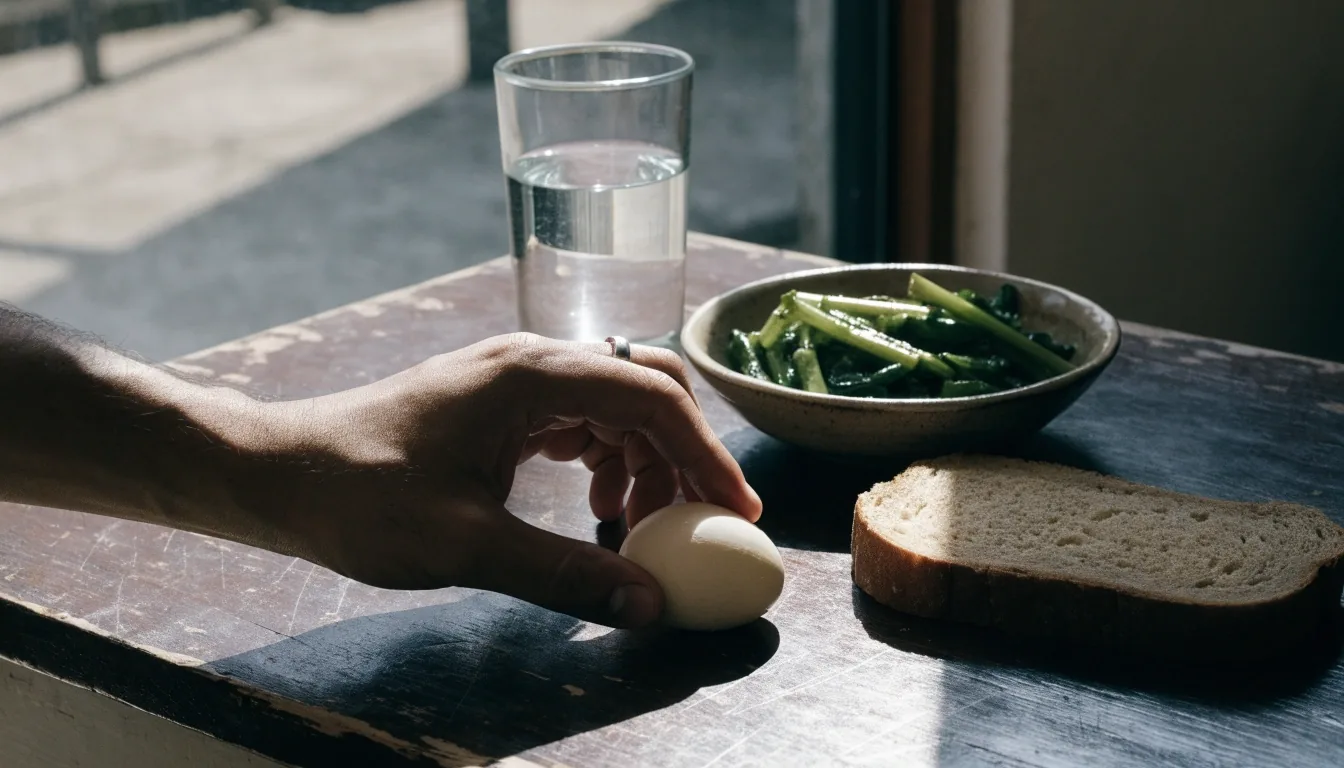
Habits that hold through a normal Jakarta week
Small habits that keep daily energy steady
Nutrition is the base, but it isn't the whole picture. Sleep, movement, meal timing, and hydration shape how you feel by mid-afternoon, and they interact with what you eat.
Pick one habit, hold it for a month, then add the next. That order matters more than the habit you choose, because a change you can repeat four weeks running tells you something a change you abandon in five days never will. Below, each habit gets its own short chapter: why it shifts energi harian, how it interacts with food, and what a workable version looks like on a Senayan schedule.
Meal timing and the afternoon dip
When you eat affects how the day feels as much as what you eat. A long gap followed by a heavy meal tends to produce a sharper dip afterward, especially with a large rice-heavy lunch. A lighter midday plate with a clear protein and vegetables, plus a snack in the late afternoon, is often more workable for a Jakarta schedule than one large midday meal.
Spreading protein across meals helps here too, which the Daily Nutrition Foundations guide covers in detail. The practical test is simple: if your energy falls off a cliff between two and four in the afternoon, look at how far apart those two meals sat and how much of the second one was rice.
A workable weekday shape
- Breakfast with a clear protein07:00
- Lunch, lighter than usual12:30
- Late-afternoon snack16:00
- Evening meal, not the day's largest19:30
Times are a shape to copy, not a rule to obey. What matters is that the gaps stay roughly even and the afternoon has something in it.
Sleep and appetite
Short sleep changes appetite, and it usually pushes toward quick, sugary food the next day. That link is worth knowing plainly: a late night often becomes a fried-snack afternoon. Getting consistent sleep timing does more for eating patterns than most meal plans, because it removes the argument with yourself at ten at night.
You don't need a perfect schedule. You need a repeatable one, ideally with a similar wake time most days, since that anchors everything else. If your week includes early starts and late finishes, protect the wake time and let the bedtime move a little rather than the other way round.

One repeatable wake time does more than any plan.
If you only change one thing this month, make it the hour you get up. Everything downstream, breakfast included, gets easier to hold once that hour stops moving.
Movement that fits a workday
You don't need a training program to support vitality. Regular movement, walking, stairs, a short session a few times a week, supports general wellbeing and makes appetite and energy more predictable. The common mistake is treating movement as an all-or-nothing category, so a busy Tuesday becomes a lost week.
Twenty minutes counts. So does walking to lunch instead of riding. Pair movement with the eating pattern on this page and you have the two levers that matter most, applied at a level you can actually maintain through a normal month.
Minutes, not hours
A brisk twenty minutes three or four times a week is enough to notice steadier afternoons. You are looking for a floor you keep, not a peak you survive.
Move before the desk
Morning movement is the easiest to protect because nothing else has claimed the hour yet. Stairs, a walk around the block, a short bodyweight set before you leave.
Walk the short trips
The lift to the third floor, the ride to a lunch spot two blocks away. Replacing those costs you nothing and adds up across a week without a schedule change.

Hydration through the day
Water is easy to forget until evening, and Jakarta's heat makes that worse. Keep a bottle visible at your desk and drink before you feel thirsty, since thirst lags behind need by the time you notice it.
Coffee and tea count toward fluids but shouldn't be the only thing you finish before six in the evening. If you train, add water around the session rather than only afterward. The goal isn't a specific number of liters; it's steady intake rather than a dry morning followed by a heavy evening of catching up.
Reading your own day
Signs it drifted
- Nothing to drink between breakfast and lunch
- A headache or heavy head by late afternoon
- Nearly all your fluids arriving after dinner
Small corrections
- One glass with each meal, without thinking about it
- A bottle in sight rather than in a drawer
- Extra water before a workout, not only after
The consistency question
The University of Wollongong's men's nutrition explainer makes the point that small consistent changes are more useful than extreme approaches. That applies to habits as much as food. A twenty-minute walk you do four times a week beats an intense routine you abandon in the second week. One protein-rich breakfast you repeat beats a perfect week you can't sustain into the next.
Aim for habits that survive a busy month, not ones that impress for a fortnight. The question to ask about any new habit is blunt: would this still be running in week five, on a week with two late meetings and a family obligation? If the honest answer is no, start smaller.
Holds through a busy month
A 20-minute walk four times a week. Something you can do in office clothes, on a day that ran long, without moving anything else in your calendar.
Impresses for a fortnight, then stops
A rigid six-day split with weighed meals and a separate shopping trip. Excellent for ten days, impossible the moment work changes shape.
Reading your own pattern
Before adding anything new, look at a normal week. Which meals do you skip? When does energy drop? Where does alcohol or sweetened drinks fit? Most men find one or two clear weak points, and fixing those first is more efficient than overhauling everything at once.
Write it down for a few days if you're unsure, in whatever form you'll actually keep. The pattern is usually obvious once it's on paper, and it tells you which habit to start with instead of guessing.
Write down what you actually ate
Three or four ordinary days, not the best ones. Note roughly what and when, plus anything you drank. Don't change anything yet; the point is a clean picture of the starting point.
Mark where energy fell
One word per day is enough: flat, even, or good. Then look back and see whether the flat days share a shape, a skipped meal, a short night, or a long gap before lunch.
Change the weakest point first
If breakfast is the gap, fix breakfast. If it's the late-night eating, start with the evening. One change held for a month teaches you more than five changes attempted together.
Re-read it after four weeks
Compare the same notes four weeks later. If the weak point moved or softened, keep going. If nothing changed, the habit wasn't the weak point and it's worth looking at a different one.
Tying it back to food
Habits and nutrition reinforce each other. Better sleep makes protein-rich breakfasts easier to keep. Consistent meals make afternoon movement more realistic. Hydration keeps appetite signals clearer. None of these is dramatic on its own, and together they're the difference between a diet that works on paper and one that holds through a normal week.
Use this page alongside the nutrition foundations guide, not instead of it. The habits set the conditions; the food itself still does most of the work. If you're weighing up supplements, the ingredient library and the label-reading guide are the two places to go next.
Questions men ask before changing a habit
Which habit should I start with if I only change one thing?
Start with the one you can hold for four weeks without renegotiating it daily. For most men that lands on sleep timing or breakfast, because both sit in front of the rest of the day and neither needs extra time carved out.
Do I need to count calories or litres to see a difference?
No. Counting is one method, not a requirement, and for this page's purpose it usually adds friction without adding much information. Rough structure, even gaps between meals, and steady fluid intake tell you most of what you need at the start.
My week is irregular. Is a fixed schedule worth attempting?
Fix fewer things. Keep a stable wake time and a breakfast you repeat, then let lunch and dinner float with the day. Two anchors that survive a chaotic week beat five that collapse the first time a meeting runs over.
How do these habits relate to taking a supplement?
A supplement sits alongside daily eating, not in place of it, and it doesn't repair a short night or a skipped lunch. If you're considering one, read the ingredient library for what each component is and the label guide for how amounts are listed, then bring questions to us directly.
I travel for work. What actually holds up on the road?
Protein at breakfast, water carried with you, and walking instead of riding wherever the day allows. Hotel food is workable if the gaps between meals stay roughly even and the largest meal doesn't land right before bed.

Send us a habit question
If you're unsure which habit to start with, or how a supplement fits alongside your current eating, write to us with a short description of your normal week. We reply to questions about food patterns, ingredients, and label reading, Monday to Friday, 09:00–18:00.
Email [email protected] · Phone +62 21 5297 6843
Jl. Jend. Sudirman No. 52, Senayan, Kebayoran Baru, Jakarta Selatan, 12190